Contents
Most Standard Operating Procedures are written once and then forgotten. They sit in a folder somewhere, gradually becoming outdated, until someone realises the documented process bears no resemblance to how things actually work.
What if your SOPs improved every time you used them?
The Problem with Traditional SOPs
Traditional SOPs are static documents. Someone writes them, they get approved, they get filed away. Maybe they get updated annually if you're lucky.
But business processes change constantly. You find better ways of doing things. Tools update. Team members develop shortcuts. Customer expectations evolve.
A static SOP can't keep up. Within months, it's describing a process that no longer exists.
What Is a Living SOP?
A living SOP is designed to evolve. It's a starting point, not a final document. Every time someone uses it, there's a built-in mechanism to capture improvements.
The concept comes from the idea of annealing metal: each pass through the process makes it a little bit better, a little more refined.
How It Works
1. Start with a Working Draft
Write your SOP as you normally would, documenting the current process. Don't aim for perfection. Aim for "good enough to follow."
2. Add a Feedback Loop
At the end of the SOP, include a simple prompt:
"Having just completed this process, what would you change about these instructions?"
This invites whoever used the SOP to flag issues while they're fresh, whether that's steps that were unclear, unnecessary, or missing entirely.
3. Review and Update Regularly
Set a schedule (monthly, quarterly) to review accumulated feedback and update the SOP. This isn't a major rewrite; it's incorporating small improvements over time.
4. Version and Date Everything
Track changes so you know when things were updated and why. This helps with training and troubleshooting.
Practical Implementation
Keep SOPs Where People Actually Work
If your SOPs live in a buried folder nobody opens, they won't be used or improved. Put them in tools your team already uses. Notion is great for this because it's easy to update.
Make Updating Easy
The easier it is to suggest improvements, the more feedback you'll get. A simple comment feature or a "suggestions" section at the bottom of each SOP works well.
Celebrate Improvements
When someone suggests a change that gets implemented, acknowledge it. You want a culture where improving processes is valued, not seen as criticism.
Start with High-Impact Processes
Don't try to create living SOPs for everything at once. Start with processes that:
- Happen frequently
- Involve multiple people
- Have caused problems in the past
- Are critical to customer experience
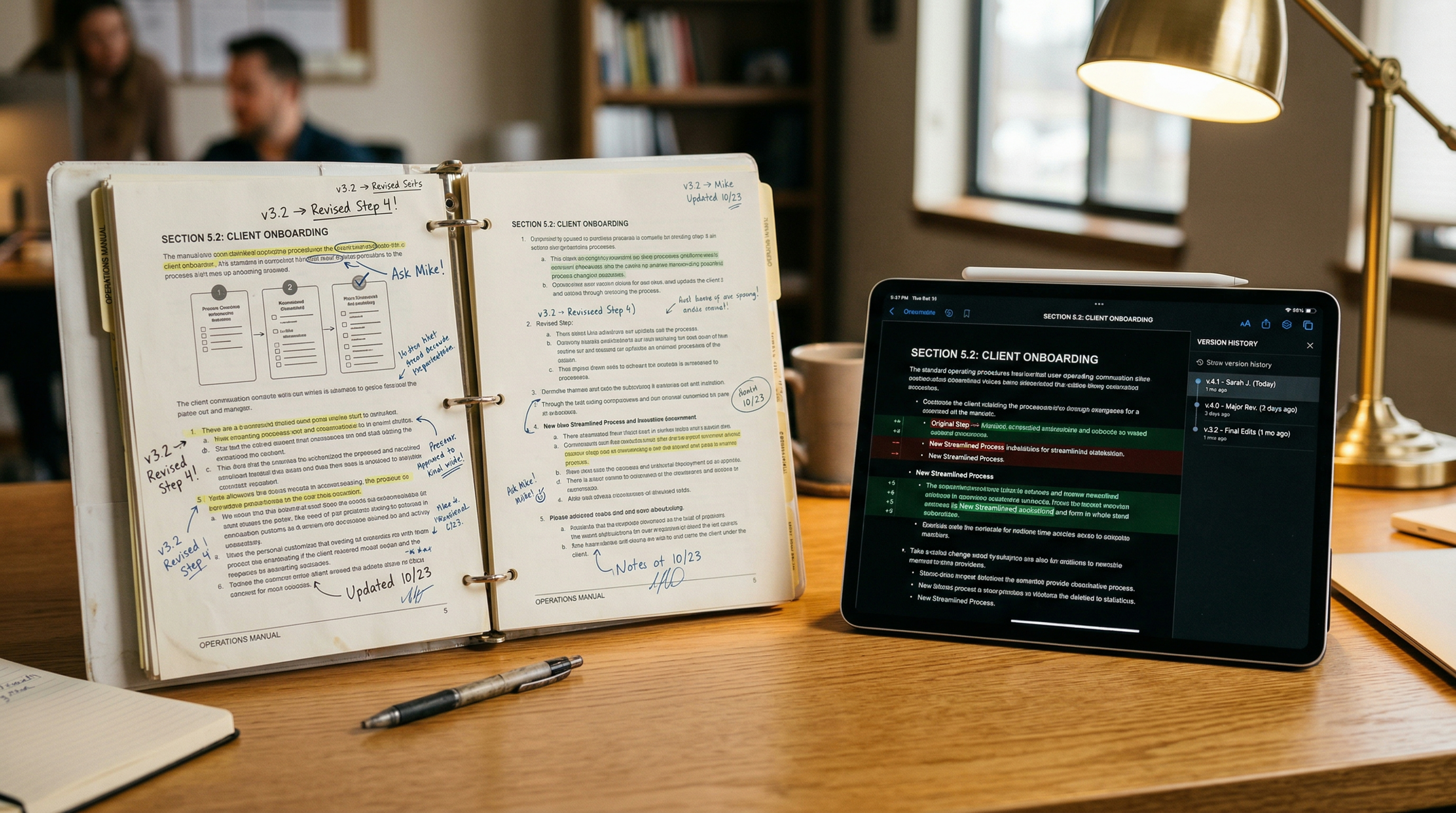
An Example: Client Onboarding
Traditional approach: Write a client onboarding SOP once. It works for a while. Six months later, you've changed tools, added steps, and the SOP is useless.
Living SOP approach:
The onboarding SOP includes a simple section at the end:
- "Anything unclear in these instructions?"
- "Steps that should be added or removed?"
- "Tools or templates that would help?"
Every team member completing an onboarding adds quick notes. Monthly, you review and incorporate the good suggestions. The SOP continuously reflects how you actually work.
Using AI to Maintain Living SOPs
Here's where it gets interesting. AI tools can help maintain living SOPs:
- Feed feedback into ChatGPT and ask: "Based on these suggestions, how should I update this SOP?"
- Use AI to identify patterns in feedback across multiple SOPs
- Have AI review SOPs periodically and flag sections that might be outdated
The combination of human feedback and AI assistance makes continuous improvement much more manageable.
Common Objections
"We don't have time for constant updates."
Living SOPs actually save time. Small, regular updates prevent the massive overhaul needed when a static SOP becomes completely outdated.
"What if people suggest bad changes?"
Not every suggestion gets implemented. You review and decide what makes sense. Most feedback will be useful.
"Our SOPs are fine as they are."
Really? When did you last review them? Processes drift faster than most people realise.
The Bottom Line
Traditional SOPs pretend the world is static. Living SOPs accept that everything changes.
Build feedback loops into your documentation. Review and update regularly. Let your processes improve every time they're used.
A living SOP that evolves with your business is infinitely more valuable than a perfect document that nobody uses.