Contents
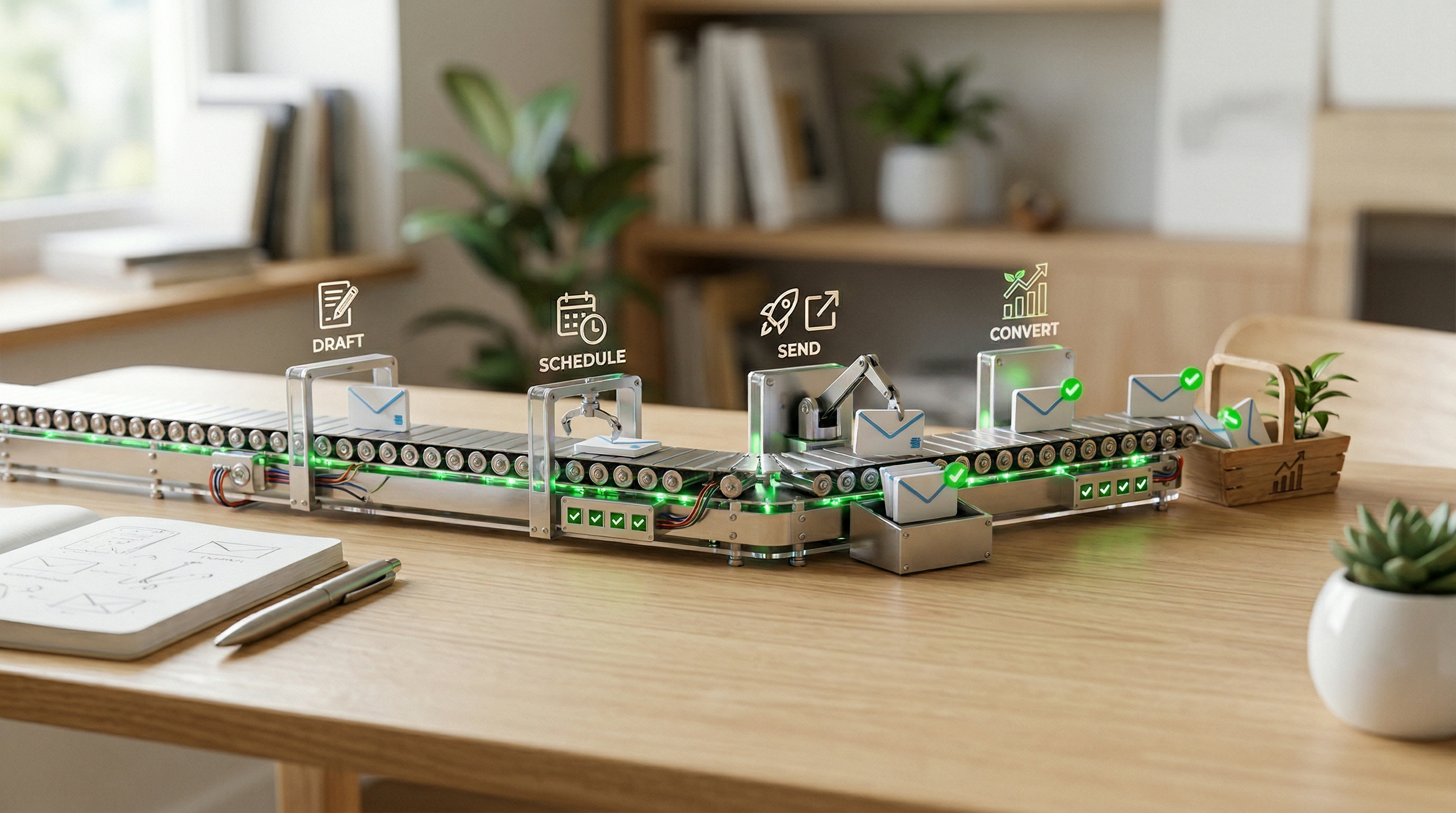
Imagine having a sales system that works 24/7, nurturing leads while you sleep, weekends included, bank holidays included. No manual follow-ups, no forgetting to check in, no leads going cold because you got busy.
That's what evergreen email sequences do.
What Is an Evergreen Sequence?
An evergreen sequence is a series of pre-written emails that automatically send to new subscribers over time. Unlike newsletters (which go to everyone at once about timely topics), evergreen sequences are triggered by individual actions and deliver timeless content.
Someone signs up for your lead magnet today? They get Email 1 immediately, Email 2 in two days, Email 3 in five days, and so on, regardless of what day it is or what you're doing.
The content is "evergreen" because it doesn't reference specific dates or events. It's always relevant.
Why They're So Powerful
They Scale Infinitely
Whether you get 10 new subscribers or 10,000, the system handles them all the same way. Your workload doesn't increase with growth.
They Ensure Consistency
Every new lead gets the same carefully crafted experience. No more some leads getting great follow-up while others fall through the cracks.
They Nurture While You Work
Your evergreen sequence builds relationships and moves leads toward a decision while you focus on serving existing customers.
They're Set-and-Forget
Once built, they run indefinitely. You might tweak them over time based on results, but the heavy lifting is done upfront.
Anatomy of a Great Evergreen Sequence
The Welcome Email (Sent Immediately)
This is your first impression. It should:
- Thank them for subscribing
- Deliver whatever you promised (lead magnet, discount, etc.)
- Set expectations for what's coming
- Be warm and personal
The Value Emails (Days 2-7)
Over the next week or so, send 2-4 emails that:
- Provide genuinely useful content related to their interests
- Establish your expertise and credibility
- Start building a relationship
- Don't sell anything yet
The Transition Email (Day 7-10)
This email bridges from pure value to introducing your solution. It might:
- Share a case study or success story
- Discuss a common problem and hint at the solution
- Ask what they're struggling with
The Offer Emails (Day 10-14)
Now you can introduce your product or service. But do it helpfully:
- Focus on how it solves their problem
- Include social proof
- Address common objections
- Make the next step clear
The Long-Term Nurture (Ongoing)
After the initial sequence, move them to a longer nurture series with less frequency (weekly or fortnightly) that continues providing value and occasionally presents offers.
Example Sequence Structure
Day 0: Welcome + deliver lead magnet
Day 2: Helpful tip related to their interest
Day 4: Common mistake to avoid
Day 7: Case study showing transformation
Day 10: Introduction to your solution
Day 12: FAQ and objection handling
Day 14: Clear call to action with deadline or incentive
Then transition to ongoing nurture.
Writing Tips for Evergreen Emails
Write Like a Human
These aren't corporate communications. Write as if you're emailing one specific person. Use "you" and "I", not "we" and "our customers".
Keep Them Timeless
Avoid references to specific dates, seasons, current events, or anything that will make the email feel dated in six months.
Make Each Email Standalone
Someone might miss an email or read them out of order. Each should make sense on its own while still fitting the overall arc.
Include One Clear Action
Every email should have one thing you want the reader to do. Read a blog post, watch a video, reply to a question, book a call. One thing.
Measuring Success
Track these metrics to optimise your sequence:
Open rates: Are your subject lines working? Aim for 30%+ for a warm list.
Click rates: Is your content compelling enough to drive action?
Unsubscribe rates: Are you losing too many people? Some is normal, but watch for spikes at specific emails.
Conversion rate: Ultimately, how many sequence completers become customers?
Common Mistakes to Avoid
Too many emails too fast. Don't overwhelm. Give people time to read and digest.
All value, no offer. Being helpful is great, but at some point you need to tell them how you can help.
All offer, no value. The opposite problem. If every email is a sales pitch, people tune out.
Generic content. The more specific and relevant to their interests, the better it performs.
Set and forget forever. Review your sequence quarterly. Update what's not working.
Getting Started
You don't need a complex sequence to start. Begin with:
- A welcome email
- Two value emails
- One soft pitch email
That's four emails. You could write them in an afternoon.
Get those working, measure the results, then expand from there.
The Bottom Line
Evergreen email sequences are one of the highest-leverage things you can build in your business. They work continuously, they scale effortlessly, and they turn strangers into customers while you sleep.
Build yours once, refine it over time, and let it work for you forever.