Contents
Here's a confession. 😂
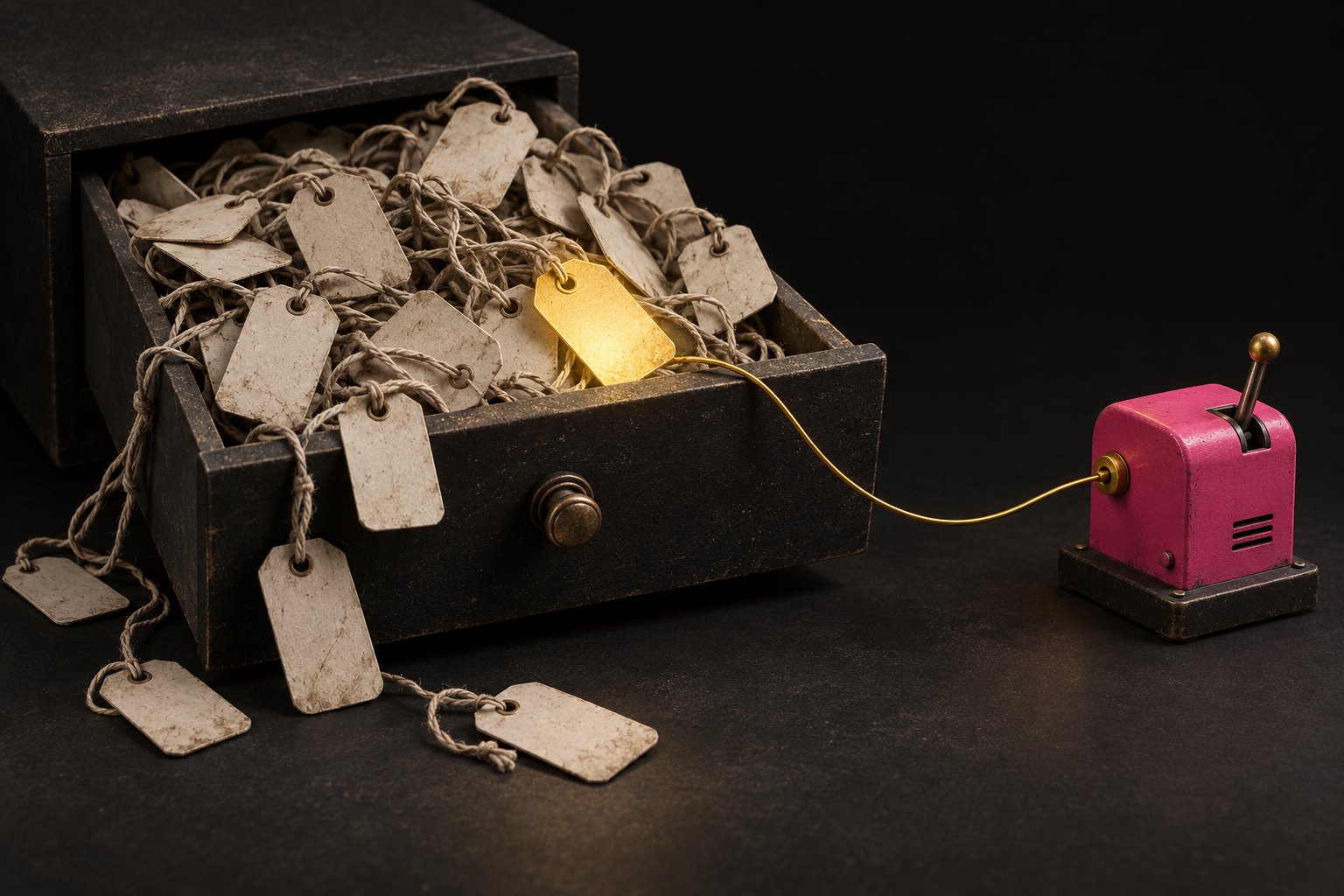
We had a job running every night. A little automated worker, doing a batch of 80 tasks while we slept.
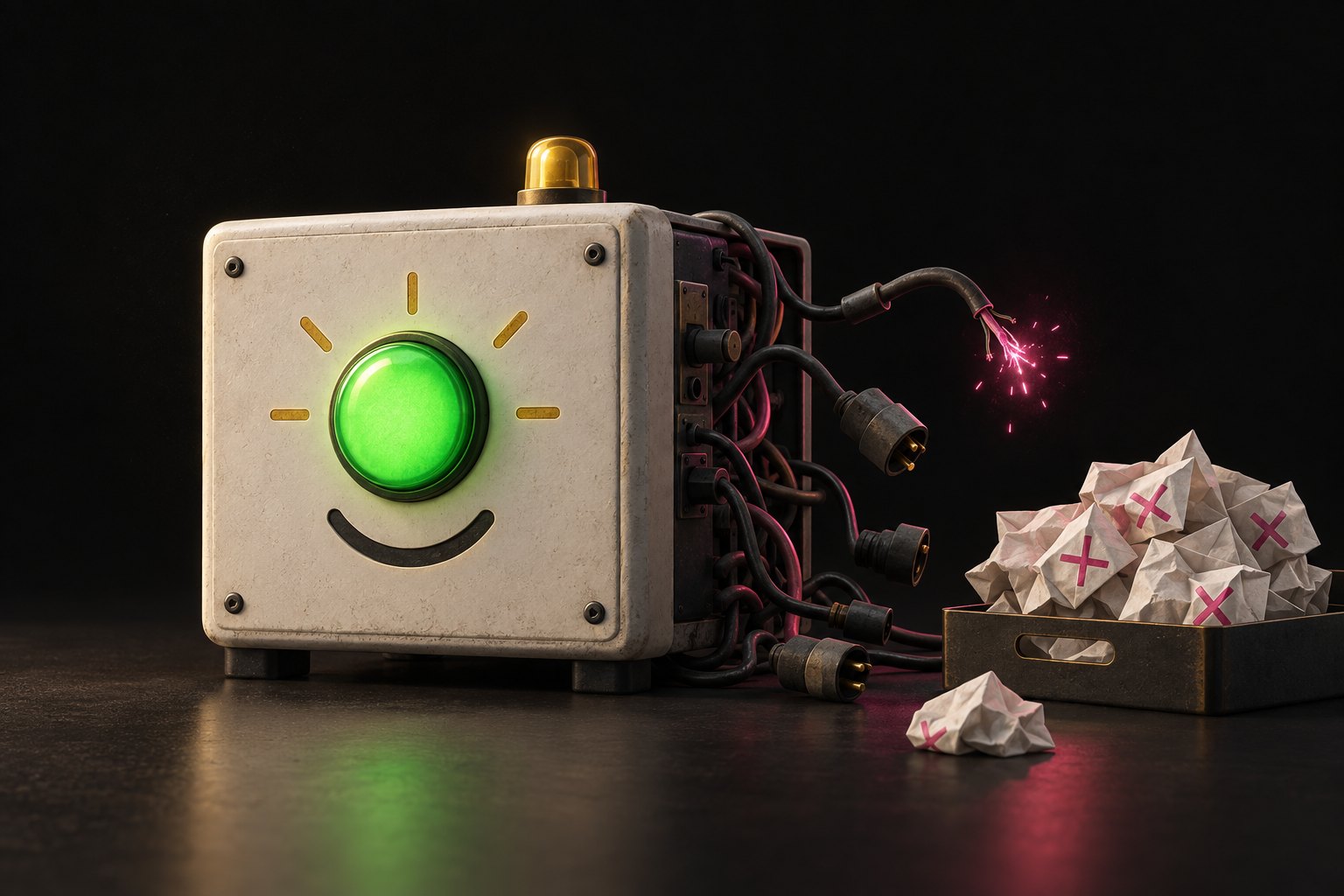
Every morning it reported back: success. Green tick. All good.
It wasn't all good. 73 of the 80 tasks were failing. Every night. For days.
How does that even happen?
Because "the job finished" and "the job worked" are two different questions, and most automations only answer the first one.
Ours was built sensibly, in the way people usually build these things. When a task failed, the job caught the error, counted it, and moved on to the next one. That's good practice. You don't want one dodgy contact to stop the other 79.
But at the end, the job looked at itself and said: "Did I crash? No? Then I succeeded."
It had counted the 73 failures. It just didn't tell anyone. The number sat in a log that nobody read, underneath a green tick that everybody trusted.
The cause, when we found it, was boring. A password it relied on had expired. One fix, two minutes. The damage came from nobody knowing for days.
You've probably got one of these
This isn't just a techy problem. It's everywhere in small business automation:
- The review request that's "on" but has been sending to an old email template that's missing the link.
- The follow-up sequence that shows as active, but the first step is waiting on a tag nothing adds any more.
- The form that "submits successfully" while the notification email goes to someone who left in March.
- The appointment reminders that stopped when your text credit ran out, with the workflow still showing a happy green dot.
In every case the system tells you it ran. None of them tell you it worked.
The one question
Here's the rule that came out of it. We now ask it about every automation we build, for us and for clients:
"If this had failed, what would it look like?"
If the answer is "exactly the same as when it works", you've got a problem. You won't find out it's broken until a customer tells you, or your numbers quietly drop and you can't work out why.
How to make failure look different
You don't need anything clever. Just make the bad news show up somewhere a human actually looks.
1. Report the numbers, not the tick.
"Done" is useless. "Sent 80, 7 delivered, 73 failed" is the kind of message you'd actually notice at breakfast.
2. Have a line where "normal" becomes "wrong".
If more than a handful fail, it stops being a report and becomes an alert. To your phone, to WhatsApp, somewhere you'll see it.
3. Check the result, not the process.
Don't ask "did the review request workflow run?" Ask "did we get any reviews this month?" If the answer drops to zero, something upstream is broken, whatever the dashboard says.
4. Test it like a customer, now and again.
Fill in your own form. Book your own appointment. Miss your own call. Takes five minutes and you'll be amazed what turns up. 🤦
5. Give every automation an owner.
Someone whose job it is to notice. If everyone owns it, nobody does.
The point
Automation is brilliant. It's also very good at failing quietly and politely, with a smile and a green tick.
The fix isn't to trust it less. It's to build it so that when it breaks, it can't hide.
So go and pick your most important automation. The one that makes you money. Ask it the question: if you'd failed, how would I know?
If you don't like the answer, you know where we are. 💪